Through a rusted metal door between banks of chest-high weeds hugging a wall, there be dragons. The portal conceals the corridor and metal stairway leading three floors down to a lair of dynamic ingenuity and muscular experience, now actively hunted by the Russian surveillance drones constantly hovering over this city, searching out targets. They know that this place exists, because it is one of the most active drone pilot and experimental drone and munitions laboratories in Ukraine. The walls are crumbling, water drips from pipes, and puffs of explosives powder which dust the floors settle on one’s boots.
The belly of this beast sits deep underground, below a bombed-out and abandoned high-rise at the very edges of Kharkiv’s vast urban canvas. Open one door off a subterranean corridor – the “smoking room” – and a cavity lets rays of sunlight from the destroyed superstructure and shattered walls of domestic apartments dozens of metres above stream down onto the huddle of materials scientists, aeronautical engineers, radio physicists, drone pilots, IT wonks, mechanics, and chemists sucking in tobacco, and blasting out smoke from their nostrils.
Here, theory meets practice in what must be one of the world’s best drone laboratories.
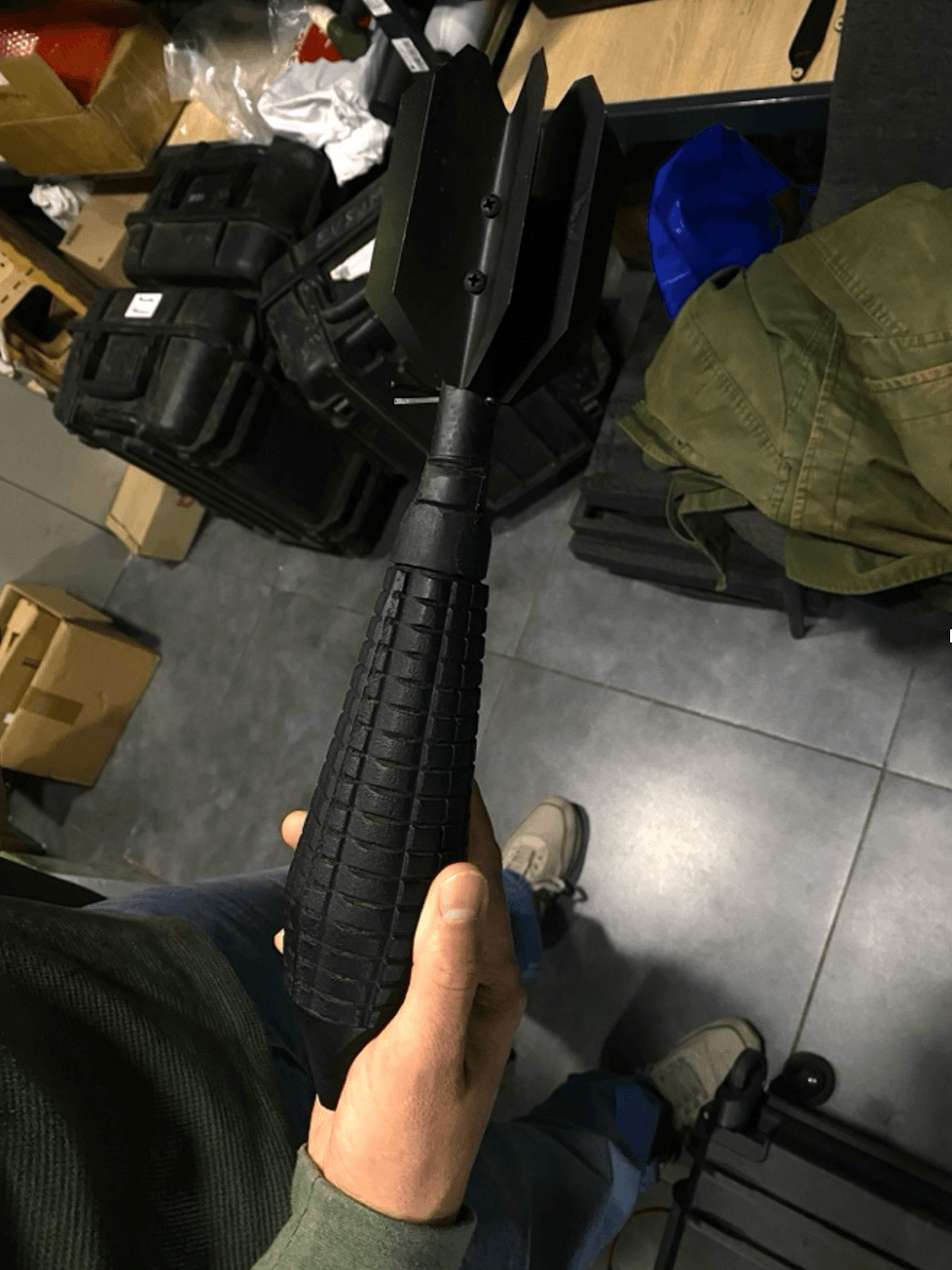
$12 cast-iron, 1.2kg drone bomb, manufactured in Kharkiv
“Architect,” (his nom de guerre and call sign) a radio physicist who has granted this privileged access, is the driving force behind the lab. It is an intentionally sticky-tape and string affair which belies the diabolical alchemy animated by the force of war which is being generated by this combined lab and drone pilot training school. From here, well over a thousand pilots have been deployed to the battlefield. Their deadly impact on Russian forces is backed by video evidence, shown to me by “Khan,” the school’s leading pilot instructor.
“Drone warfare technology is the dynamic tension between distance, weight, and materials, tested against application and refined through constant invention,” says Architect, clutching a $12 cast-iron drone armament designed by the lab. “The poetry is in the language of signals. Can we scramble theirs, and evade the downing or capture or confusion of our own drones? Can we preserve the lives of our pilots, while hunting out and killing theirs? This is the terrible game which Russia’s invasion has forced us to play.”
In one vast chamber instructors have rigged a maze of cardboard, rubber, and string to mimic the obstacles faced by FPV (first person view) pilots in the field. Like children in a tinny game arcade, a dozen young trainee pilots earnestly manoeuvre miniaturised drones through skies circumscribed by the vaulted ceiling, bumping against silhouettes, passing through plastic pipes, looping around tangles of string, and rising to the ceiling high above before diving-bombing the faux targets below like wobbly, death-dealing biplanes.
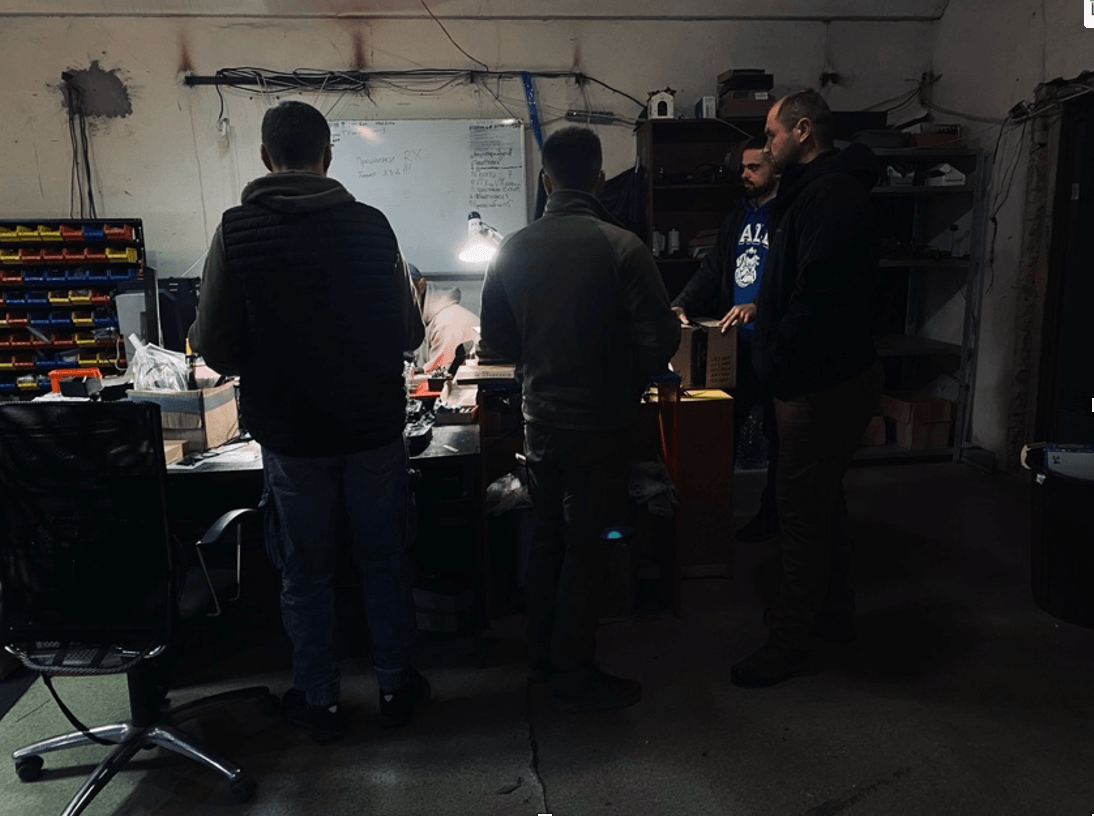
Drone technicians, pilot training school
The school is reinventing these machines in almost real time. “We have a real-time feedback loop which is almost impossible to reproduce anywhere in the world,” says architect.” Our pilots bring direct experience from the field every day. We adjust. They take it back to try it out, while we try to leap-frog the chain of invention by a constant imagining of what must come next. You’re seeing the future here, being gamed out every day.”
In another room explosives are being cooked in household appliances meant for family-sized helpings of borscht (TNT must be slow-cooked to avoid boiling). Concoctions are drawn from materials “not available on the Internet,” according to Khan. “In fact, we are drawing our recipes mostly from an analogue chemistry manual last published in 1965. We tried getting an older one published some time in the 1930s, but haven’t been successful so far.” The chemist in charge peers at his steaming amalgam like a backyard brew master scrutinizing his mash.
Apart from the feedback loop born of proximity to the battlefield, the lab is loosely attached, but not beholden, to Ukraine’s high command. It takes the minutiae of battlefield developments, and while deploying fresh invention and tactics in real time, feeds in parallel those tactical developments which appear robust up to headquarters which sit a thousand kilometres away (and largely beyond effective missile and drone targeting). “Our great advantage,” notes Architect, “is that testing is cheap, effective, and based on actual experience. Experience is acquired and deployed both vertically and horizontally.”
The morning of this visit follows Hezbollah’s successful penetration of Israeli air defences the day before to attack the base of the Golani Brigade, killing four soldiers and wounding dozens more. The hunting out and last moments of Hamas’ leader, Yahya Sinwar, are captured on drone camera. The struggle for battlefield dominance is always one of wit, skill and daring. The past months have introduced an air of Great War into the Ukrainian fight, as drones have begun to physically dogfight above the battlefield, with tactics and machines rapidly evolving in parallel. Now, effective lethal miniaturisation and coordinated “swarming” is incipient, according to Architect.
Two years of drone deployment make their first use in this conflict seem almost adolescent. From purchasing drones around the world in a scramble in 2022, Ukraine is now on track to producing them in the millions annually. Almost 100 businesses have been licensed to build drones just inside Ukraine. Thousands of companies around the world are rushing to compete in a field rich with civilian, defence, and security applications, one spurred by the ongoing wars in Ukraine and Israel. On the train into Ukraine, this correspondent encounters an Australian team bringing drone offerings to the Ukrainian military.

Explosives cooking, drone pilot school, Kharkiv.
As with any weapons innovation, quite where the sudden acceleration in drone technology will lead is unmappable. People are limited by the horizon of their imaginations, and there is no will to dally with consequences among a people struggling to sustain their country against invasion, and where survival is paramount. So although there be dragons, Ukrainians must fight Russia with all means available. “One thing,” says Khan with a grin. “Good idea to clean your boots before taking your next flight home.”